
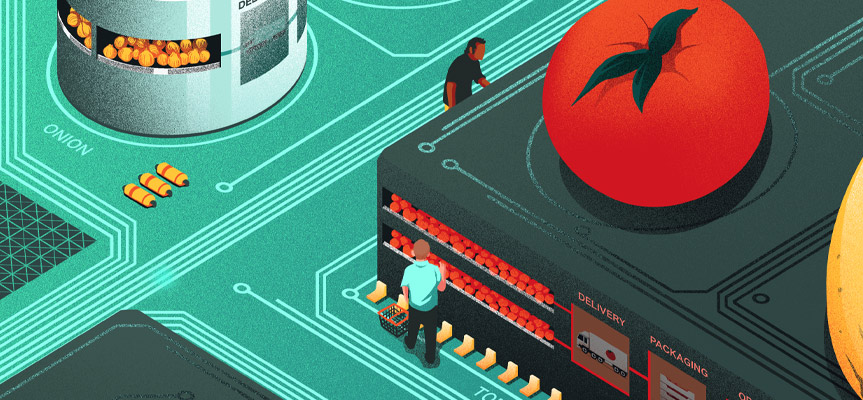
Introduction to Blockchain Technology in the Food Supply Chain
In today’s world, managing the food supply chain has become one of the main challenges in the food industry due to its complexity and the need for transparency and security. Blockchain technology, as a modern digital tool, has the ability to transform these processes. This technology, by creating a decentralized and secure network, enables the precise recording and tracking of all stages of food production, distribution, and consumption.
Considering the importance of food supply chain security and the market’s demand for transparent information, using blockchain has become a key factor for success in the food industry. The Grownida Innovation Center has also played a significant role in developing this technology in Iran and international markets by providing consultation and blockchain-based solutions.
The Importance of Transparency and Security in the Food Chain
The food supply chain, from production to consumption, involves multiple stages, each of which can pose risks to product quality and safety. Transparency and data security not only increase customer trust but also help reduce fraud, spoilage, and food waste.
With blockchain, all data is recorded in an immutable ledger. This feature ensures that no information can be manipulated, and every point in the food chain can be easily traced.

What is blockchain, and how does it differ from traditional systems?
Blockchain is a decentralized data recording technology in which each transaction is recorded as a block and linked to previous blocks in a chain. Unlike traditional databases, where information is stored on a central server, blockchain provides high security, transparency, and traceability.
In traditional systems, data manipulation and lack of transparency are possible, but blockchain removes these limitations and increases trust throughout the entire supply chain.
The Role of Blockchain in Food Traceability
Tracking food products from farm to table is one of the most important applications of blockchain. By recording each stage of production, packaging, transport, and distribution in blockchain, consumers can verify the source and quality of products.
This capability not only enhances consumer trust but also helps producers and distributors identify potential problems more quickly and implement corrective actions.
Benefits of Blockchain for Producers and Consumers
Using blockchain in the food supply chain offers numerous advantages:
- Increased Transparency and Traceability: Every stage of production and distribution is accurately recorded.
- Enhanced Data Security: Information is immutable and tamper-proof.
- Reduction of Fraud and Spoilage: Resource tracking becomes faster and more reliable.
- Greater Consumer Trust: Consumers are confident that the product is safe and standard-compliant.
- Improved Business Decision-Making: Accurate data helps managers design more efficient processes.

Challenges in Implementing Blockchain in the Food Supply Chain
Despite the advantages of blockchain, its implementation in the food industry faces several challenges:
- High Initial Costs: Setting up the blockchain network and required equipment requires substantial investment.
- Need for Employee Training: Working with blockchain systems requires expertise and training.
- Technical and Compatibility Limitations: Integrating with legacy systems and existing software can be challenging.
- Legal and Regulatory Issues: Data privacy and legal regulations must be strictly followed.
However, innovation centers providing practical solutions help minimize these challenges.
Applications of Blockchain Technology in the Food Supply Chain
Blockchain technology can be applied at every stage of the food supply chain:
- Production: Recording information about fertilizers, water, crop type, and cultivation conditions.
- Packaging: Tracking production dates, expiration dates, and quality standards.
- Transportation: Recording routes, temperature, and storage conditions during transport.
- Sales and Consumption: Providing product information to customers and ensuring food safety.
How to Use Blockchain to Monitor Food from Farm to Table
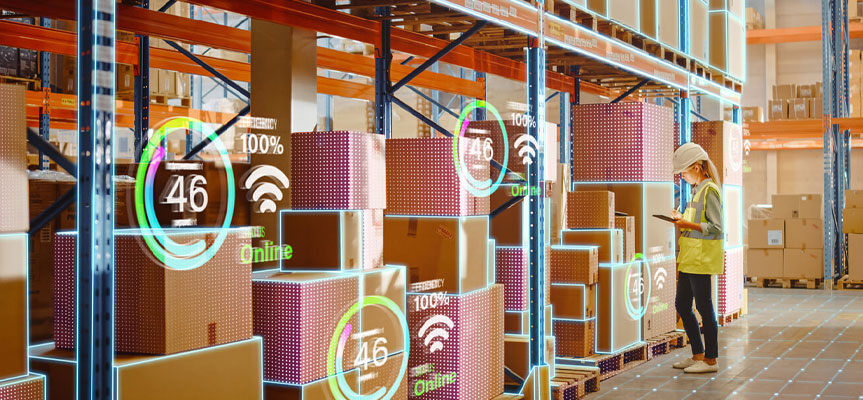
To monitor food, blockchain systems are combined with sensors, the Internet of Things (IoT), and data recording devices. Every movement of the product, from harvest to final delivery, is recorded. This data is transparently available to producers, distributors, and consumers, enabling better and faster decision-making.
The Role of Innovation Centers in Blockchain Development
Innovation centers, focusing on advanced technologies, play a crucial role in the development and implementation of blockchain in the food supply chain. By providing customized solutions and specialized consultation, these centers help businesses enhance transparency, security, and traceability of their products while increasing consumer trust.
Conclusion
Blockchain technology is a powerful tool for improving transparency, security, and traceability in the food supply chain. This technology offers significant benefits for producers, distributors, and consumers, potentially increasing customer trust while reducing fraud and spoilage. Despite implementation challenges, collaboration and consultation with innovation centers such as the Grownida Innovation Center can facilitate the adoption of this technology.
With the application of blockchain, the food industry is prepared to enter an era where transparency, trust, and quality are the main standards of success.
Frequently Asked Questions (FAQs)
How can blockchain improve the food supply chain?
By recording every stage of production and distribution immutably, transparency and traceability are enhanced, strengthening customer trust.
What are the benefits of food traceability with blockchain?
Accurate tracking of the product journey from farm to consumer, reducing fraud and spoilage, and improving product quality and consumer confidence.
What challenges exist in using blockchain for food products?
High initial costs, the need for employee training, compatibility with legacy systems, and legal considerations are among the main challenges.
Why does the food industry need blockchain?
Due to the complexity of the food supply chain, the risk of fraud and spoilage, and the need for transparency, blockchain ensures security and builds trust.
How can the journey of food from farm to table be tracked?
By integrating blockchain with sensors and IoT, every stage of production, transport, and packaging is recorded, and the information is transparently available.
