
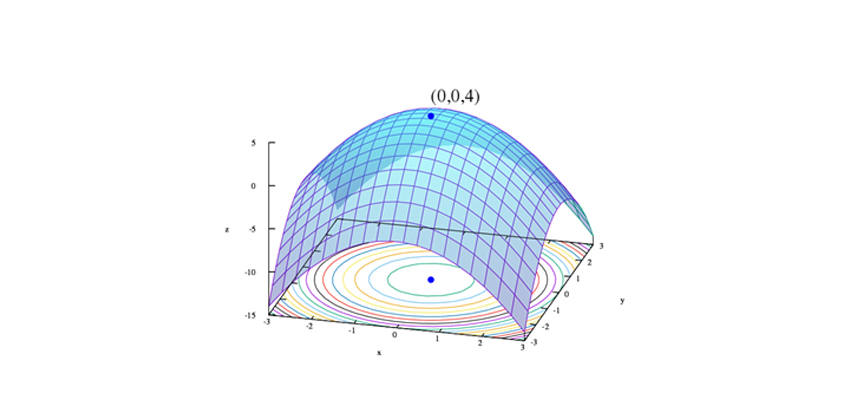
The concept of optimization refers to achieving a structure and process that closely align with the desired goals and maximize efficiency. These goals are sometimes singular and, in most cases, multi-objective. Optimization must occur within a defined scope and constraints, helping to achieve the best outcome with minimal cost. In the food industry, optimization does not have a single, definitive solution because it is influenced by numerous factors and can only be performed within the boundaries of existing knowledge.
Optimization is necessary because, in most cases, modifying a process to favor one goal comes with the loss of other characteristics. In such situations, finding a point that satisfies as many goals as possible becomes the main challenge of the optimization technique, or in other words, the optimization process.
General Structure of Optimization
Optimization, whether for formulation or process, typically occurs in three stages. The first stage involves understanding the product and defining the goals or desired characteristics. The second stage focuses on acquiring knowledge about the effects of various factors on the desired properties, achieved through experiments, statistical analysis, and the development of predictive models. Finally, in the third stage, optimization algorithms are used to aggregate the models and determine the optimal conditions.
Determining the Predictive Models
Arguably, the most critical step in optimizing formulations and processes is the development of the predictive models. Creating highly accurate models is only possible with precise laboratory data acquisition and suitable experimental designs. After creating the experimental design and collecting sufficient data, regression or empirical-analytical models are determined. The modeling stage is delicate and requires the correct modeling techniques to avoid creating bias in the model. In some cases, where data volume is large and numerous variables and responses are available, neural network models combined with fuzzy logic might be a better approach for creating a comprehensive model. Nonetheless, linear models usually offer the highest predictive accuracy.

Optimization Goals and Algorithms
Once the model is established, optimization is carried out using optimization algorithms. An optimization algorithm is designed to find the minimum value of the objective function. The objective function is essentially a mathematical combination of the predictive models based on the desired goals. A simple example can clarify this concept. Suppose the optimization goal is to find the temperature of a dryer device for a specific product, aiming for the lowest final moisture content, shortest drying time, and least discoloration. For such a problem, each temperature might be suitable for one of the objectives. This results in a multi-objective optimization problem.
After determining the predictive models for each characteristic based on the dryer temperature variable, an objective function is defined by multiplying all the predictive models. By applying the optimization algorithm, the dryer temperature that minimizes the objective function will be the optimal result. If certain objectives have higher importance in multi-objective optimization, the optimization will be directed toward the desired goal by applying weighted coefficients to the predictive models.
Constraints in Optimization
Every optimization is bound by experimental limits. For instance, the optimal dryer temperature found is only acceptable within the studied temperature range.
For food formulations, the second limiting factor is national and international standards. For example, the final product must meet specific chemical parameters defined in the product’s standard. In such cases, the chemical parameters are defined as a “within-range” constraint during optimization.
The third limiting factor in optimization is the cost of the formulation, which does not require a predictive model but has a specific computational formula. However, it is included as a computational constraint in the optimization.
