
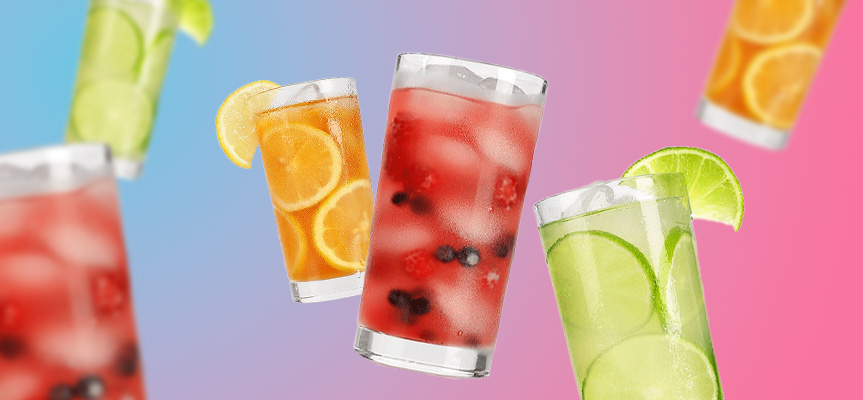
When we look at a cool, colorful drink, the first thing that grabs our attention is its appearance especially its color. Food coloring in beverages not only affects our visual perception but also shapes our expectations of taste. The key question is: What exactly is food coloring for beverages, and why is it so important? Is it just about aesthetics, or is there more to it? This article takes a closer, detailed look at the subject.
What Is Food Coloring?
Food coloring is a substance used to change, enhance, or create color in food and beverages. These compounds can be derived from natural sources (such as plants, animals, or minerals) or be synthetically produced (in laboratories). The primary goal of using food colorings is to improve product appearance, attract consumer attention, and create harmony between color and expected flavor.
In beverages, food colorings are used in both liquid and powder forms and must comply with health and safety standards set by organizations such as the Food and Drug Administration (FDA) or the World Health Organization (WHO). These colorings play a crucial role in beverage formulation, as color is the first sensory feature that draws the consumer toward the product. For example, a green drink may evoke mint or lime flavors, even if the actual taste is something else.
Why Is Color Important in Beverages?
Color in beverages goes beyond decoration, it acts as a psychological and marketing tool. The reasons why color is important in beverages include:
- Influence on sensory perception: Color affects the perception of flavor, aroma, and quality. Psychological studies have shown that specific colors can shape flavor expectations. For instance, red may suggest strawberry or raspberry flavor to the consumer, even if the actual taste is different.
- Visual appeal: Bright and attractive colors encourage consumers to buy the product. Clear, colorful drinks stand out more on store shelves.
- Brand identity: Specific colors become part of a brand’s identity. For example, dark brown in cola drinks or golden hues in malt beverages help consumers recognize the brand.
- Consumer trust: Uniform and stable colors convey a sense of quality and consistency. If the color of a beverage changes due to light exposure or time, the consumer might view it as a low-quality product.
Types of Food Colorings Used in Beverages
Natural Food Colorings
Natural colorings are extracted from plant, animal, or mineral sources. For example:
- Chlorophyll (green): Extracted from plants
- Anthocyanin (purple): Found in grapes, blueberries, strawberries
Artificial Food Colorings
Artificial colorings are chemically synthesized and usually have higher stability than natural ones. Some commonly used artificial colors in beverages include:
- Tartrazine (yellow)
- Azo dyes (orange-red)
- Brilliant Blue (blue)

Approved Food Colorings and Oversight by the Food and Drug Organization
Food colorings used in the food industry, including beverages, must be approved by health authorities such as the FDA (in the U.S.), the National Standards Organization of Iran, or the Joint FAO/WHO Expert Committee. These organizations publish lists of approved colorings that include:
- Acceptable Daily Intake (ADI): The safe amount of daily consumption for each food coloring, determined through scientific testing
- Approved uses: Some colorings are only approved for specific products (e.g., beverages or confectionery)
- Labeling requirements: Manufacturers are required to declare the type and amount of food coloring used on the product packaging
In Iran, the Food and Drug Organization (IFDA) strictly monitors food colorings. Only those that comply with international standards like Codex Alimentarius are allowed for use. For example, colorings like Tartrazine (E102), Caramel (E150), and Brilliant Blue (E133) are approved and considered safe when used within the standard dosage.
Brands such as Grownida, in collaboration with the Grownida Innovation and Creativity Center, produce and supply stable and approved food colorings. Products like the WINNOVENT Brilliant Blue color stabilizer are widely used in beverage production.
Applications of Food Coloring in Various Beverages
Food colorings are used differently across beverage types depending on the product and target market:
- Carbonated soft drinks: These often use dark colors like Caramel (E150) for cola or bright colors like Brilliant Blue (E133) and Tartrazine (E102) for fruity sodas. These enhance the perception of strong, classic flavors.
- Malt beverages: Golden or amber colors (such as Caramel or Beta-Carotene) are common in classic non-alcoholic malt drinks, reinforcing the product’s natural and plant-based image.
- Energy drinks: These usually feature bright artificial colors like blue (Brilliant Blue) or green (a mix of Tartrazine and Brilliant Blue) to convey a sense of energy and vitality.
- Juices and natural beverages: Natural colorings like Anthocyanin (from grapes or strawberries) or Chlorophyll (from spinach) are preferred here, especially in organic products.
- Sports drinks: These typically use clear and bright colors to convey freshness and hydration.
Choosing the right color depends on factors like target market, packaging type, and storage conditions.
Know more: Why Has the Color Blue Become Popular in Beverages?
The Best Food Coloring for Beverages
The answer to this depends on the type of beverage. For natural or organic drinks, natural food colorings like beet juice or saffron are suitable options. In contrast, for industrial beverages, artificial colorings with greater stability are typically chosen.
Is Food Coloring Harmful to the Body?
The consumption of permitted food colorings within the limits set by health authorities is considered harmless. However, excessive intake or the use of unauthorized colorings can pose risks such as allergies, hyperactivity in children, or even liver damage. Therefore, choosing standard food additives is critically important.
The Effect of Food Coloring on the Sensory Properties of Beverages
Food coloring has a profound impact on the sensory characteristics of beverages, including:
- Flavor Perception: Color can create a taste expectation in the consumer’s mind. For instance, a yellow beverage may suggest a lemon or pineapple flavor—even if the actual taste is different.
- Aroma: Certain colors can enhance the perception of aroma. For example, green coloring may boost a sense of freshness or a herbal scent.
- Visual Appeal: Vibrantly colored and clear beverages increase the sense of enjoyment and perceived quality for the consumer.
- Overall Experience: Color that aligns with flavor and packaging improves the consumer’s overall experience. For example, a dark red drink in a sleek bottle conveys a sense of luxury.
Sensory psychology studies have shown that when a drink’s color does not match its flavor (e.g., a green-colored beverage with a strawberry taste), the consumer may feel a disconnect and experience less satisfaction with the product.
Read on: Visual Quality of Beverages : How to Improve It?

How to Stabilize the Color of Beverages؟
Color stability in beverages depends on several factors, including:
- pH of the Beverage: Food colorings behave differently in acidic or alkaline environments. For example, anthocyanins are more stable in acidic conditions (such as in carbonated drinks).
- Packaging: Using dark or opaque bottles (such as amber glass or UV-resistant plastics) helps prevent color degradation from light exposure.
- Temperature and Light: Exposure to UV light or high temperatures can degrade colors. Storing in a cool, dark place helps maintain color integrity.
- Stabilizers: Using chemical or natural stabilizers like WINNOVENT for Brilliant Blue can enhance color stability.
Stabilizers help maintain color by neutralizing free radicals or reducing the impact of environmental factors like light and oxygen. Brands such as Grownida offer innovative solutions to this challenge with products like WINNOVENT.
The Difference Between Natural and Artificial Food Colorings
Natural and artificial food colorings are the two main types of color additives used in the food and beverage industry, differing significantly in source, stability, safety, cost, and application.
Natural colorings are extracted from biological sources such as plants (e.g., anthocyanins from grapes or chlorophyll from spinach) and occasionally animals (e.g., carmine from the cochineal insect), giving a product a natural appeal. In contrast, artificial colorings like Tartrazine (yellow) or Brilliant Blue (blue) are synthetically produced in laboratories and are designed for vivid, consistent coloring.
Natural colorings are more sensitive to light, temperature, and pH and may degrade quickly. Artificial colorings, due to their stable chemical structure, are more resistant to environmental conditions and are better suited for mass production. In terms of safety, natural colorings are generally considered safer but may cause allergic reactions in some individuals (e.g., carmine). Artificial colorings, though closely regulated by health authorities, can in some cases trigger allergic reactions or hyperactivity in children.
Natural colorings are more expensive due to complex extraction processes, while artificial ones are cheaper due to industrial production. Natural colorings are used in organic and health-oriented products like natural juices but require specific storage conditions. Artificial colorings, due to their high stability, are more common in carbonated and energy drinks.
From an environmental perspective, natural colorings have a lower impact due to their biological origins, but cultivating raw materials may strain natural resources. Artificial colorings may have greater environmental impact due to their chemical composition. Health-conscious consumers tend to prefer natural colorings, whereas artificial ones are favored for products requiring a vibrant appearance.
The choice between these two depends on the product type, target market, and legal requirements. Manufacturers must strike a balance between safety, stability, and visual appeal.
Natural Colorings for Beverages
Natural colorings are extracted from biological sources and are well-suited for health-focused and organic beverages. Some of the most common natural colorings include:
- Saffron: Golden yellow color, ideal for traditional and luxury beverages.
- Beetroot: Reddish-purple color, widely used in fruit juices and natural drinks.
- Anthocyanins: Red, purple, and blue hues from fruits like grapes, blueberries, and red cabbage.
- Chlorophyll: Green color extracted from spinach or spirulina, suitable for plant-based drinks.
- Carotenoids: Yellow to orange hues derived from carrots, turmeric, or peppers.
These colorings are generally safe but require specific storage conditions (such as low temperatures and light-resistant packaging) to maintain their stability.

Can Natural Coloring Be Used in Beverages?
Yes, in many natural and traditional beverages, natural coloring is the best choice. These colorings are generally safer and are preferred by informed consumers. However, it’s important to note that they are less stable and require special storage conditions.
Permitted Beverage Additives and International Standards
Beverage additives, including colorings, must comply with international standards such as the Codex Alimentarius, FDA standards, and EFSA (European Food Safety Authority) guidelines. These standards cover:
- Acceptable Daily Intake (ADI): The safe amount of each additive, based on clinical and toxicological studies.
- Labeling: Clear information about the type and amount of additive must be displayed on packaging.
- Safety Testing: Additives must undergo rigorous testing to gain approval.
In Iran, the Food and Drug Administration and the Institute of Standards and Industrial Research of Iran (ISIRI) are responsible for monitoring permitted additives. These organizations ensure that colors and other additives are used within allowed limits and are safe for consumers.
WINNOVENT Color Stabilizer
This product, offered by Grownida, is recognized as a professional stabilizer for blue colors in beverages. It is widely used in the beverage production industry.
Know more: What is Brilliant Blue food coloring?
Grownida Brand and Innovation in Food Colorants
Grownida, as one of the active brands in the field of food additives, has succeeded in producing highly stable colorants with international certifications by focusing on innovation, quality, and safety. The collaboration of this brand with the Grownida Innovation and Creativity Center has paved the way for enhancing the quality level of food colorants in Iran’s food industry.
Summary
Food colorants play a vital role in the beverage industry, from visual appeal to influencing taste perception and brand identity. The choice between natural and synthetic colorants depends on the type of product, target market, and production requirements. Natural colorants are more suitable for organic and health-focused products, while synthetic ones are commonly used in mass production due to their stability and lower cost. Strict oversight by health authorities and the use of high-quality stabilizers like WINNOVENT ensure the safety and quality of the product. Ultimately, a clear understanding of the characteristics and applications of food colorants helps both producers and consumers make more informed choices.
Frequently Asked Questions
What are food colorants for beverages made of?
They are made from natural compounds such as plants or chemically produced in laboratories.
Are food colorants harmful?
If the approved type is used in the specified amount, they are generally harmless.
Which food colorants are approved for use in beverages?
Colorants approved by the Food and Drug Administration, such as caramel, Brilliant Blue, and Tartrazine.
What colorant is used for malt beverages?
A combination of golden yellow or caramel colorants, depending on the type of product.
Can natural colorants be used in beverages?
Yes, natural colorants such as saffron, beetroot, and chlorophyll are good options.
