
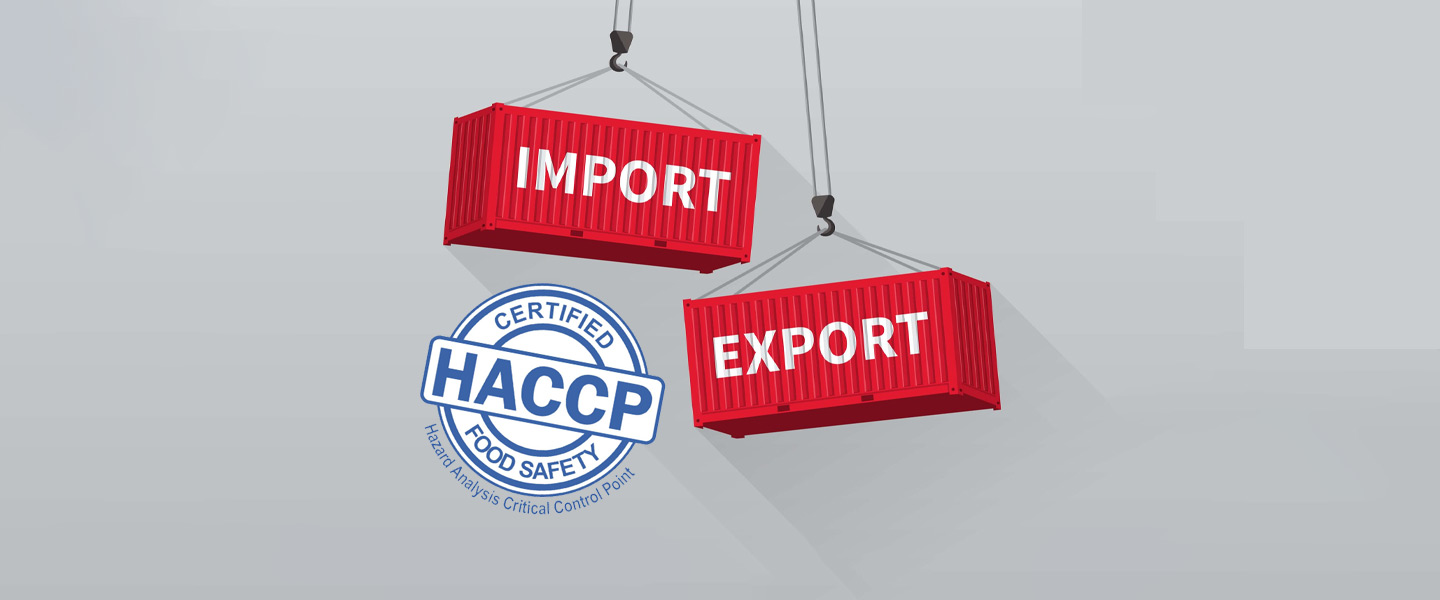
An Introduction to the Importance of Food Export Standards in Global Markets
Exporting food is not merely selling in foreign markets; it is a test of global trust. Today, quality, safety, and compliance with food export standards are essential for survival in the global competition. Countries like Germany, Japan, and the United States do not allow even a gram of food product to enter without safety certification and compliance with international food standards.
Moreover, global consumers no longer only care about “taste”; they also demand “consumption safety” and “sustainable production.” Therefore, an Iranian exporter aiming to enter major markets like Russia, the UAE, Oman, or even Europe must be familiar with the principles and requirements of global food standards.
In simple terms: following the standards opens the gateway to lucrative global markets, while ignoring them closes that gateway with the first returned shipment.
Why Compliance with International Food Standards is Essential for Export Success
In international trade, trust is not built with signatures—it is built with standards.
When a product holds certificates such as HACCP or ISO 22000, it signifies reliability in terms of health, safety, and production processes.
Food export standards act as a protective shield for every importing country, safeguarding citizens’ health. Therefore, if an Iranian exporting company wishes to enter the European Union market, its products must comply with international export standards and EFSA (European Food Safety Authority) regulations.
Conversely, for markets like Iraq, Afghanistan, or CIS countries (such as Russia and Kazakhstan), the focus is more on regional food standards and health certifications from the country of origin.
In fact, adherence to global standards is the only way to ensure brand credibility, market longevity, and long-term customer trust.

مهم ترین استانداردهای صادرات مواد غذایی The Most Important Standards for Food Export
The Role of HACCP in Ensuring the Safety and Quality of Food Exports
If we were to introduce just one standard as the cornerstone of food safety, it would undoubtedly be HACCP. The acronym stands for Hazard Analysis and Critical Control Points.
This global food standard was designed in the 1960s by NASA to ensure the health of astronauts’ food and later became the most important food safety control system worldwide.
During HACCP implementation, each stage of food production is analyzed step by step to identify and control potential hazards (such as microbial, chemical, or physical contamination).
Simply put: HACCP ensures that no unsafe food leaves the factory.
For Iranian exporters, particularly in canned goods, dried fruits, dairy, and meat, implementing HACCP is not only mandatory but also a key factor for product acceptance in the destination country’s customs.
Note: Countries like the UAE and Qatar usually require Iranian food exporters to provide a valid HACCP certificate from internationally recognized authorities.
ISO 22000; The Foundation of Food Safety Management Systems
Alongside HACCP, another standard exists that can be considered a “more managerial version”: ISO 22000.
This standard was developed in 2005 by the International Organization for Standardization (ISO) and quickly gained popularity among global exporters.
ISO 22000 combines HACCP principles with quality management (ISO 9001). This means it not only focuses on hazard control but also oversees the entire management system for production, storage, transportation, and packaging.
Benefits of obtaining ISO 22000 certification for food exporters include:
- Increasing foreign customer trust
- Facilitating entry into European and Asian markets
- Enhancing the quality of exported food products
- Reducing human errors in production lines
From a professional exporter’s perspective, having ISO 22000 is not just a credential—it is a global common language.

Aligning Domestic Standards with Destination Standards: Challenges and Practical Solutions
One of the major issues in Iranian food exports is the discrepancy between national standards (INSO) and the standards of target countries.
For example, the allowable nitrate level in vegetables in Iran may be higher than in the European Union; exporting the same product without adjusting the production line may lead to shipment rejection.
To resolve this, companies must first identify the destination standards and then adapt their production, packaging, and quality control processes accordingly.
Practical solutions include:
- Using internationally accredited laboratories to test for pesticides and heavy metals.
- Consulting specialized export standardization companies.
- Training technical staff on HACCP and ISO 22000.
- Recording production process information in international systems for greater transparency.
Packaging Requirements for Food Exports and Their Impact on Customer Trust
If content is king, packaging is the crown.
In food exports, packaging is not just about appearance; it is an integral part of international export standards.
A standard package must have three features:
- Preserve product quality and safety during transportation.
- Provide complete information in the destination country’s language (including ingredients, production date, expiration date, and country of origin).
- Comply with environmental and recycling requirements.
Countries like Germany or Sweden strictly enforce eco-friendly packaging regulations. In contrast, markets like Iraq or Oman focus more on durability and information readability.
Golden tip: Standard packaging not only builds customer trust but also reduces the likelihood of returned shipments to near zero.
The Importance of Quality Control and Pesticide Residue in Exporting Fruits and Vegetables
One of the most sensitive sectors in exports is fresh agricultural products. In recent years, multiple Iranian shipments have been rejected at Russian and Indian customs due to pesticide residues.
Importing countries generally use MRL (Maximum Residue Limits) systems to monitor products.
In the European Union, even trace amounts of pesticides (as low as 0.01 mg/kg) can lead to complete shipment rejection.
For exporters, the following measures are crucial:
- Using approved pesticides and observing the withdrawal period (time between application and harvest).
- Sampling and testing in internationally accredited labs.
- Training farmers on export health standards.
The Impact of Regional Standards on the Competitiveness of Iranian Products
In addition to global standards like Codex Alimentarius or ISO, many economic regions, such as the European Union, Eurasia, and the Gulf, have their own specific standards.
For example:
- EAEU member countries (like Russia and Belarus) follow TR CU regulations.
- In the Middle East, GSO (Gulf Standard Organization) standards serve as evaluation criteria.
Iranian exporters aiming to compete in regional markets must be aware of these regional food standards to adapt their products accordingly.

The Future of Iranian Food Exports in the Shadow of Standardization and Sustainable Development
The future of Iranian exports is tied to one word: trust.
And this trust is built only through compliance with standards.
Today, export food quality is no longer optional; it is the ticket to entering the global market.
Investing in training, modernizing production lines, complying with environmental regulations, and using new technologies such as digital traceability (Blockchain Traceability) illuminates the path forward.
If Iran can embed global food standards into domestic production culture, it can evolve from a traditional exporter to a globally trusted brand.
Conclusion
Ultimately, adhering to food export standards is not just an administrative requirement; it is a smart marketing strategy.
Any exporter who values safety, quality, and global trust will remain sustainable in the international market.
If you need guidance on obtaining HACCP or ISO 22000 certification, the best time to start is today, because tomorrow, your target market might open its doors to others instead.
Frequently Asked Questions
What is a food export standard, and why is it important?
It is a set of international regulations that ensure the quality, safety, and health of exported products, and it is essential for entry into foreign markets.
How can HACCP be implemented in a food factory?
By identifying hazards, determining critical control points, training personnel, and conducting continuous audits by accredited experts.
What is the difference between domestic and international food standards?
Domestic standards are usually limited to national requirements, while international standards must comply with FAO, WHO, and regional authorities’ regulations.
What factors cause a product to be rejected at the destination customs?
Non-compliance with hygiene, absence of HACCP or ISO certification, incomplete labeling, or exceeding allowable pesticide levels.
What are the steps to obtain ISO 22000 certification for food exporters?
It includes initial audits, staff training, process adjustments, implementation of the food safety management system, and obtaining certification from an accredited body.
