
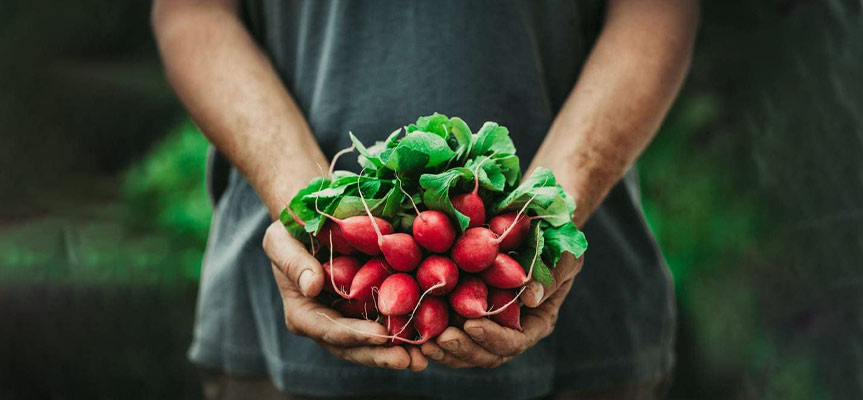
In recent years, the consumption of organic products has become one of the most significant global trends in nutrition, health, and agriculture. From large stores in Europe and the United States to local markets in Iran, organic products are sold on shelves with labels such as “natural,” “healthy,” or “chemical-free.” Yet, one point that always occupies buyers’ minds is the high price of these products.
Why should one pay several times more for a kilo of organic apples than regular ones? Is this cost truly worth it?
In this article, we examine scientifically, economically, and managerially why organic products are more expensive and the role of factors such as production costs, quality oversight, organic farming practices, and limited supply.
Definition of Organic Products and Their Differences from Conventional Products
“Organic products” refers to goods produced without the use of chemical fertilizers, pesticides, hormones, or artificial additives. In organic farming, the soil is naturally enriched, production cycles are maintained sustainably, and human and environmental health are prioritized.
In contrast, conventional products are often influenced by chemicals and industrial processes to increase growth speed and yield and reduce production costs.
This difference in production methods and quality control is one of the primary reasons for the higher price of organic products.

High Costs of Organic Farming
Contrary to popular belief, organic farming is a more costly and time-consuming process than industrial agriculture. Eliminating chemical fertilizers and pesticides means replacing them with natural methods, such as the use of composted manure, crop rotation, biological pest control, and beneficial microorganisms.
These methods increase the production cost per unit. In Iran, organic farmers also face challenges such as a shortage of organic seeds, lack of proper infrastructure, and high costs of obtaining organic certification.
In many countries, including Iran, only a limited number of farms operate under organic standards. This limited supply disrupts market balance and results in higher retail prices.
Certificates and Strict Standards
For a product to be marketed as “organic,” it must undergo multiple stages of inspection and approval. Organizations such as USDA Organic in the U.S. or the National Standard of Iran for organic products closely monitor the entire production chain.
This process includes farm inspections, soil sampling, reviewing input usage, and even monitoring the packaging chain.
Obtaining these certifications is usually costly and time-consuming; many farmers must wait years for certification. These regulatory costs are one reason for the higher price of organic products.
More Labor and Lower Yields
In industrial agriculture, most tasks are performed by machinery. However, in organic farming, many steps are still carried out manually or semi-manually. From weeding to harvesting, all require human labor.
At the same time, organic products generally yield 20 to 30 percent less than conventional ones. This means that farmers must work harder to harvest less produce. The result? Higher final prices for consumers.
Maintaining Quality and Lower Shelf Life
A major challenge of organic products is their shorter shelf life. The absence of artificial preservatives means these products spoil faster, and some may be lost during distribution.
In contrast, industrial foods with chemical additives remain on shelves for much longer. This difference necessitates a more precise and faster distribution chain for organic products, which increases transportation and storage costs.
The Role of Supply and Demand in Organic Product Pricing
From an economic perspective, price always results from the balance between supply and demand. Currently, demand for organic products is rising, but supply remains limited.
This natural market imbalance keeps prices high. In Iran, part of this issue stems from a lack of government support and modern agricultural infrastructure. Nevertheless, many innovative brands have recently attempted to make organic production more sustainable through agricultural startups and research and development networks.

Are Organic Products Worth the Higher Price?
This question is perhaps the most important part. The short answer is: it depends on what you aim to achieve.
If health, quality, and environmental sustainability matter to you, organic products are worth the extra cost.
Studies have shown that organic products often have higher nutrient density, more antioxidants, and lower levels of chemical residues.
For example, in organic fermented beverages such as kefir, kombucha, and natural probiotic yogurts, the presence of beneficial bacteria (microbiota) improves digestion and gut health and strengthens the immune system, whereas industrial versions often contain preservatives.
Thus, although the price is higher, the quality and impact on health create a tangible difference.
Challenges of Producing and Distributing Organic Products in Iran
The organic market in Iran is still in its early stages. Problems such as lack of sustainable policies, insufficient farmer training, high equipment costs, and weaknesses in the cold chain and logistics hinder its expansion.
Additionally, consumer unawareness about the differences between organic and conventional products allows some counterfeit “organic” items to be sold, reducing market trust and slowing growth.
Innovative brands strive to build trust by linking scientific R&D with commercial production and improving the real quality of organic products in the country.
The Future of Organic Products: Toward Sustainable Development
With growing public awareness of the environmental impact of industrial agriculture and the importance of health, the global organic market is expected to grow significantly over the next decade.
In Iran, if the government, private sector, and innovation centers collaborate, production costs can decrease and access to healthy food can increase.
Moreover, advances in organic fermented beverages, alternative proteins, and smart agriculture could create new models of sustainable production.

Conclusion
The high price of organic products is not merely due to branding or luxury. This price reflects precise processes, more labor, strict standards, and production that prioritizes human and environmental health.
Ultimately, it is a choice between the cost today and health tomorrow. Although more expensive, consuming organic products is an investment in a more sustainable future for the body, society, and the planet.
Frequently Asked Questions
Why are organic products more expensive?
Because their production costs, quality control, labor, and organic certification processes are higher than those of conventional products.
Are organic products really healthier?
Yes, studies show that they contain lower chemical residues and higher nutrient content.
Do organic products in Iran have specific standards?
Yes, the National Standard Organization of Iran has established special regulations for organic farming and products, though full implementation remains challenging.
Are fermented beverages considered organic products?
Yes, if produced with natural ingredients and without chemical additives, beverages like kefir or kombucha are popular examples of healthy organic products.
How can the production costs of organic products be reduced?
Through modern agricultural technologies, farmer training, collaboration with innovation centers, and development of the domestic market.
